Dell Medical School at the University of Texas at Austin
Austin, Texas
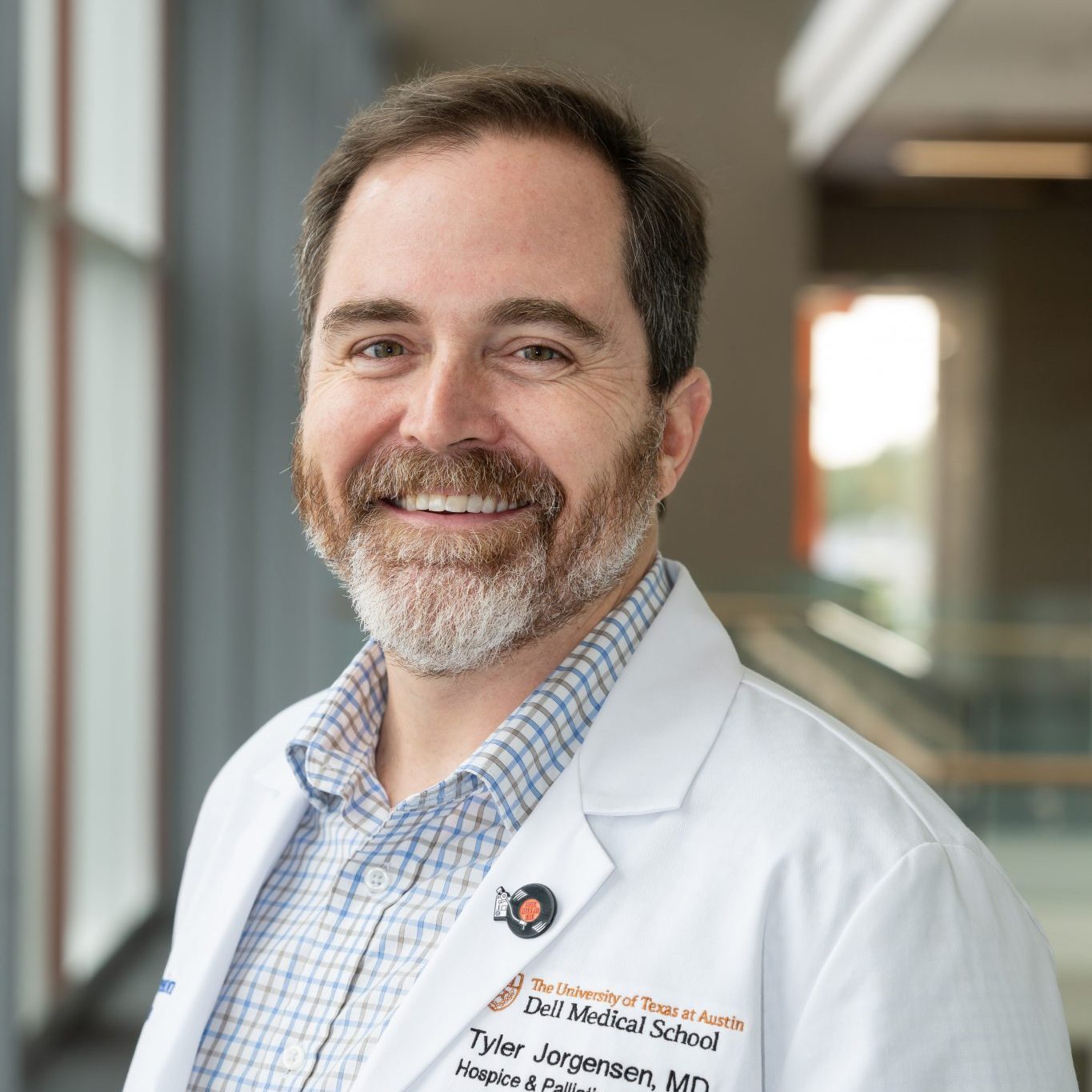
During the early, isolating months of COVID, Tyler Jorgensen treated a retired professor with terminal cancer. Dr. Jorgensen was working in an emergency department and felt cut off from the people around him. The patient, through charm, curiosity, and conversation, drew him out of it. “His kindness and our burgeoning friendship in his final five days changed my life,” he says.
That friendship stayed with Tyler as his work took a new direction. Dr. Jorgensen had spent years in emergency medicine, including time as a medical director who led his team through the early days of COVID. He went on to train in hospice and palliative medicine, and calls it “a second act in medicine, one that I love even more than the first.”
Today he is an assistant professor of internal medicine at Dell Medical School at the University of Texas at Austin. He serves on the inpatient palliative medicine team covering two Austin hospitals, including a safety net hospital, and is the school’s palliative care and geriatrics curricular lead.
His definition of compassion has changed along the way. In the ER, it meant readiness and action. Now, he says, it means “slowing down and listening. It means sitting unhurried. It’s bearing witness non-judgmentally. It’s tending to a patient or loved one’s biggest concerns and worries first, not necessarily the issue I find most pressing. It means recognizing the honor we have to step into someone else’s story and play a role.”
Nowhere is that approach more visible than in ATX-VINyL, the program Dr. Jorgensen started in 2022 while still a fellow. It brings record players and carefully chosen vinyl to hospitalized patients, many of them near the end of life. Today, the program has fifteen “vinyl volunteers” and offers 55-70 listening experiences a month. Patients and families say they feel connected, at peace, and even transported when a favorite record starts to spin. Colleagues say the program “restores choice, identity, and connection.”
“Tyler reminds us that connection and meaning are not extras in healthcare,” says a colleague. “They are central to what we do. He lives that out every day in ways that are both simple and powerful.”
Those who work with Dr. Jorgensen describe someone who meets people where they are. He has brought art or music to a bedside, tracked down a patient’s favorite meal, and returned late in a shift just to talk. A student who volunteered with him said, “Working alongside Dr. Jorgensen has profoundly shaped how I view my future in medicine. He has been a role model in showing me that being a physician is not only about treating illness, but about finding meaningful and creative ways to help people heal.”
Dr. Jorgensen cares just as much about his colleagues as he does his patients. He knows that many of his colleagues are hurting, so he has built places for honesty and reflection. He teaches writing workshops, shares his own story to open the door for others, and takes part in Mortals in Medicine, a storytelling night for physicians. He co-created The Lazarus Phenomenon, a storytelling night for residents, and he serves as a peer supporter for colleagues in crisis. Their Music in Medicine series brings touring musicians to perform for healthcare workers. He hosts a podcast, “My Medical Mixtape,” where he talks with health professionals about grief and joy in medicine. He is also featured in “River Therapy,” a new documentary from Fin&Fur Films aiming to help emergency medicine colleagues address the burnout and mental health challenges so prevalent in the field today.
He also advises Last Writers, a student group that writes memoirs for hospice patients, and at his institution’s first Schwartz Rounds session he told the story of the retired professor.
Dr. Jorgensen says that patients teach him the most about compassionate care. The retired professor who befriended him during COVID was an early and especially meaningful example, and many patients have inspired him since. He sees it as an honor to step into someone else’s story and play a part in it, and he has come to believe that “when healthcare is done well, healing happens in both directions.”
© 2026 The Schwartz Center. All Rights Reserved. Site Map

