Belfast Health and Social Care Trust
Belfast, Northern Ireland
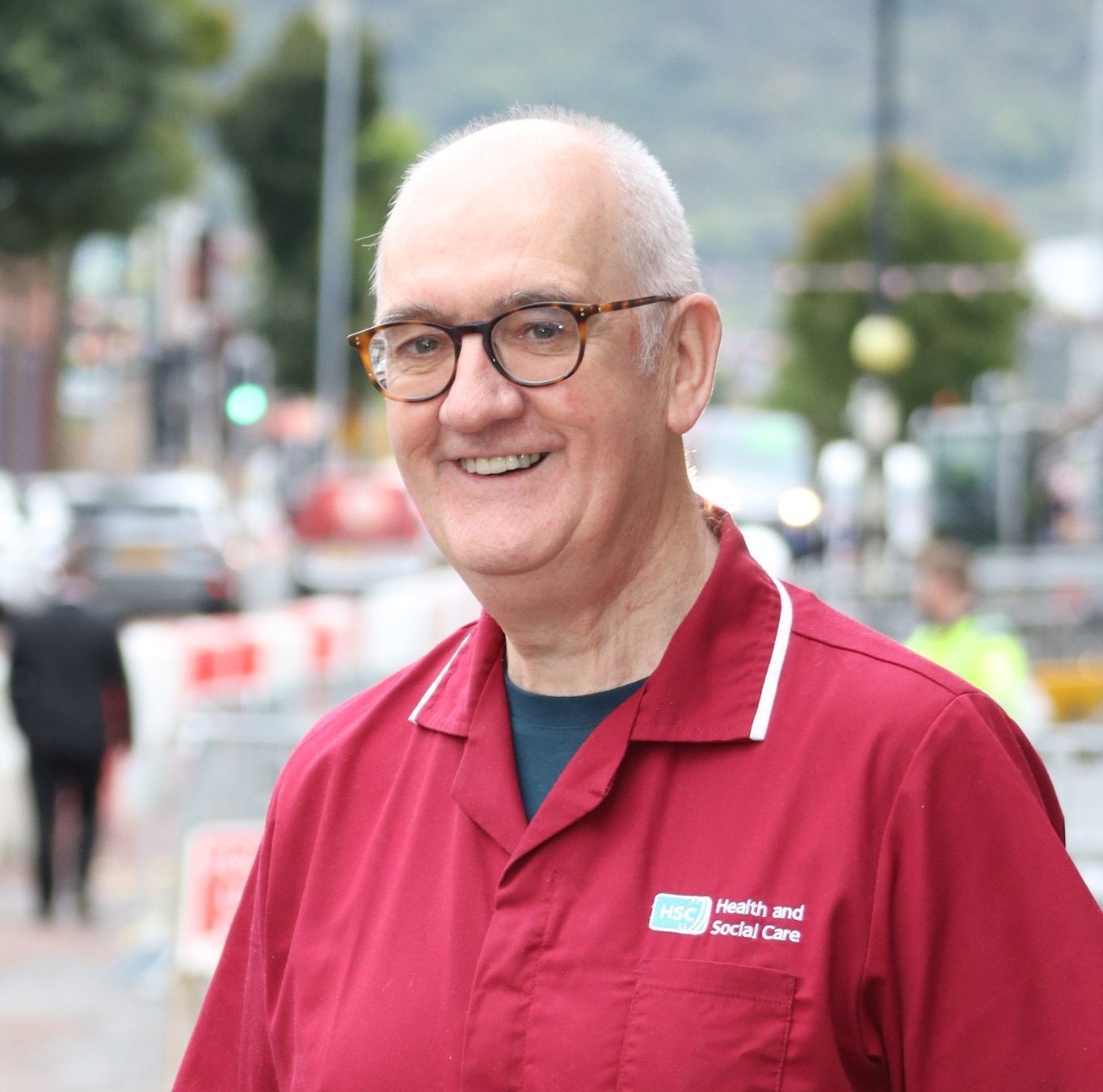
When a man in his care developed a deep wound on his arm, Gerry arranged to meet him over a period of time and chased him to get the dressing changed. “He saved my arm,” the man says. “I think without Gerry a lot of service users would have lost limbs.”
That persistence runs through Gerry’s work. He has been a community nurse with the Belfast Trust’s inclusion health service for nearly two decades, caring for men and women experiencing homelessness across the city. Nursing has been his work for forty years. He spent part of that time in an emergency department in Sydney serving an area of deprivation, then on acute medical wards in the UK supporting detoxification programs, before he found his way to inclusion health.
The need is stark. Gerry notes that in the UK, people experiencing homelessness die at an average age of roughly 45 for men and 43 for women, more than thirty years younger than the national average. He works in that gap every day. He travels the region doing nursing assessments and wound care, giving flu vaccines in winter, and helping people stay on their HIV medication. He screens for Hep C and HIV and then stays involved to organize treatment. The team’s medical bus lets them draw bloods, dress wounds, and support people with conditions like diabetes and COPD. It also gives them a safe place to offer emotional support to people sleeping rough.
Much of what Gerry does is advocacy. He phones general practitioners so that people aren’t removed from the register after a missed or conflicted appointment. He sits in meetings with probation, police, the city council, and housing providers, so that when someone is housed, the right support follows. He visits patients in hospital and helps plan their discharge. He also trains other health professionals in trauma-informed care, working to break down the stigma that keeps people away from help. A colleague says he goes beyond the call of duty on every shift, making sure each person’s needs are met before he leaves.
The people he cares for describe it in plain terms. One says Gerry has supported him through years of treatment and “treats me with dignity, respect and compassion.” Another, in a note of thanks, calls him a “godsend” who is “never angry” and “always there to help,” and signs off with “heartfilled hugs.” A partner in the city’s homelessness community writes that he “never gives up until the individual receives the support they need.”
Gerry is also proud of how far the service has come. It began as an innovative, nurse-led doorstep service and is now a core-funded NHS team, with a psychotherapist, podiatrist, social worker, general practitioner, support worker, and nurses working alongside him. He credits the Trust for backing it.
For Gerry, all of it starts with one value. “Without respect there is no relationship,” he says. When people feel listened to, he believes, they engage more in their treatment and recover better. He calls compassionate care “the bedrock for nursing care,” and after forty years it is still part of his daily routine.
© 2026 The Schwartz Center. All Rights Reserved. Site Map

